After writing more than 400 entries, I've decided to bring the Harvard Extended blog to a close. This is the final post. It's a long one, filled with observations, praise, and criticism of the Harvard Extension School and its degree programs. There are also four "top ten" lists of popular, controversial, and interesting posts that I've written up over the years, grouped into topic areas (my thesis experience, views of the Extension School, research interests, and miscellaneous). After today, I won't be adding any new material to the blog, other than to reply to comments. I'd like to thank long-time readers for their curiosity, participation, and support over the years -- if you're interested in following me elsewhere online, or staying connected with the Harvard Extension School community, I have some links for you further down.
If you're a new reader and you've reached this page, it's probably because you searched online for information about the Harvard Extension School. Or, maybe someone told you about the obscure blog run by a graduate student there, and you wanted to read some first-hand insights into the school and its programs.
You've come to the right place. I was an Extension School student from 2003 to 2008, and, until recently, operated one of the few non-official sources of information about the Extension School -- the Harvard Extended blog, which you're looking at right now.
 Over the years, many
 Questions about the Harvard Extension School
Is the ALM/Master of Liberal Arts program challenging? Does it represent a quality degree? (Updated) For those students who take all or most of their classes in person on the Harvard campus and complete the degree requirements, the ALM/liberal arts degrees absolutely represent quality (I don't feel the same way about online classes, however. Scroll down to see why). Students who register for on-campus coursework study under Harvard professors and recognized experts in their fields, and truly engage with them in the classroom. Harvard faculty demand a lot from students, and often use the same reading materials and assignments for their Extension School and GSAS sections.
The course offerings in a few liberal arts fields are superb. Harvard has a large number of extremely talented faculty who are used to working with very bright colleagues and students, and the university has world-class libraries and other facilities. The rich Extension School course catalog reflects these factors. It is a wonderful feeling to browse through the course offerings before the semester starts, seeing what's available and who's teaching certain sections. Where else would you be able to study genetics with a Harvard Medical School professor; a class titled "American Protest Literature from Tom Paine to Tupac" that is taught by two Harvard faculty members with expertise in literature, history, and African-American studies; or classes on the history of Christianity, led by an expert from the Harvard Divinity School? Besides enrolling at the Extension School, the only way to have these types of educational experiences would be to attend Harvard College, the Graduate School of Arts and Sciences, the Harvard Medical School, or the Harvard Divinity School.
Quality is also manifested in the tough requirements for admission to the ALM/Liberal Arts program. Students have to prove they can handle the coursework and research requirements before they can matriculate. However, the element that really sets the ALM/Liberal Arts program apart is the thesis. It is a major research and writing project that is guided by a Harvard faculty member, and prepares students for advanced research elsewhere. It takes years to complete, and is probably the most difficult research project that most students will ever undertake, with the exception of those who go on to write a doctoral dissertation or book. Just a tiny percentage of the graduate students who come to the Extension School ever complete the ALM thesis. For all degree programs, including the undergraduate ALB and professional master's programs which don't require a thesis, the overall graduation rate relative to the number of people who register for courses is 3% (Source: Dean Michael Shinagel, 2009 address to degree recipients).
The quality and rigor of the ALM/Liberal Arts program attracts high achievers. In my graduating class, there were successful professionals as well as students who had completed their undergraduate and earlier graduate degrees at Harvard, Yale, Cornell, Georgetown, and the University of Pennsylvania.
Those who are unprepared for serious study won't get very far. Some prospective degree candidates assume that the experience will be akin to a typical continuing education program. They quickly learn otherwise. While anyone can take a class at the Extension School, students who want to study for a degree have to prove they can walk the walk before they are admitted. Harvard instructors have extremely high expectations of HES degree candidates, and the workload can be absolutely brutal. Classes, homework, papers, exam preparation and thesis research will dominate students' evenings and weekends for years (four is typical).
The washout rate is high. People who sign up for classes and expect to float through the ALM program won't make it past the admissions requirements. Matriculated students who can't keep up with the academic demands will eventually be forced out by poor grades (a B- or higher is required for each course and students must have a 3.0 GPA to graduate) or their inability to complete the thesis. Nine out of ten people who enroll in Extension School classes will never receive an ALM or ALB degree, and even among matriculated students who have been admitted to one of the ALM/liberal arts programs, half won't make it to Commencement.
What about the ALM degrees in information technology and management? (Updated) I can't answer that question -- I never took any IT or management classes at the Extension school.
But I can talk about other aspects of the programs. Despite being called "master of liberal arts" degrees, they are actually professional degrees. And, unlike the Liberal Arts ALM degree, the professional ALMs no longer have any Harvard instructor requirements.
This is a shocking development. The Extension School has portrayed the end of the Harvard instructor requirement as a positive move, saying that it enables more flexibility in course selection. Unfortunately, it also takes away one of the primary reasons for attending the Extension School -- being able to study under real Harvard faculty.
A little history is necessary to explain why the Extension School administration decided to jettison one of its core competencies for its professional degree programs. When the professional degrees were grown from the much smaller professional certificate programs, the Extension School attempted to duplicate the "Harvard Instructor" requirement that governs the liberal arts-focused ALB and ALM degrees. In fact, the printed 2002-2003 Extension School catalogue actually used the term "Harvard Instructor" for both liberal arts and professional degree requirements.
The professional degree programs were a hit. However, the school had difficulty attracting Harvard faculty to teach the professional classes. Sometimes it was because Harvard's other schools didn't have faculty who taught those subjects -- for instance, there is no journalism or media studies department from which the Extension School could recruit instructors for its graduate journalism degree. In other cases, Harvard professors could not be enticed to teach at the Extension School. In his book The Gates Unbarred, Dean Michael Shinagel admitted this was a problem.
This situation caused the Extension School to loosen the criteria to include "Harvard-Affiliated Instructors", including working professionals and non-faculty researchers from Harvard's huge staff. The school also greatly ramped up its reliance upon pre-recorded distance education classes featuring Harvard faculty, which by their very nature limit direct interaction between faculty and students. This, in turn, greatly expanded the potential customer base outside eastern Massachusetts, increasing demand for more online course offerings.
As for the Extension School turning to affiliates to teach its professional classes, many of them bring huge amounts of experience and talent to their respective programs. However, they are not Harvard faculty members responsible for driving research and academic dialogues at the University. In addition, in many cases the affiliates' experience is specific to Harvard's own operations, which may not apply to the wider world.
According to a letter sent to me by an officer at the Extension School in July 2010, the professional programs' affiliate requirement is being replaced by "advisory board oversight," which the Extension School officer suggests will provide "better quality control". The letter further suggests that the change will allow the Extension School to recruit more talented faculty from other area schools as well as working professionals from outside Harvard.
While recruiting professors from Boston University, Bentley, Boston College and UMass will improve the quality of the instruction in these programs, it is a tacit acknowledgment that the professional degree programs have failed to fit the model established by the Extension School to offer a Harvard academic experience led by Harvard faculty members to students. It further sets a precedent for launching new professional degree programs that have no connection to the University's existing areas of study, and opens the door to criticism that Harvard Extension School degrees aren't "real" degrees because they no longer represent study under Harvard's top-notch faculty.
President Lowell, who established the Extension School more than 100 years ago, would have been disappointed. From the archives of The Crimson:
"President Lowell, in speaking of the relations of the University to the community, laid special stress on the importance of confining university extension to fields in which the existing resources of the university could be placed at the service of the community. It was much better, he said, to have substantial instruction of a high grade given by a few of the most eminent and stimulating teachers than to have superficial or merely entertaining courses of a popular nature."There are a few additional things I would like to note about the ALM in Management program. Completing the ALMM degree requirements will not result in a Harvard MBA, which can only granted by the Harvard Business School. The Business School is a completely different campus entity that has no direct connection with the Extension School. The pedagogy at the two schools are different -- for instance, the Business School stresses the case method and team-building exercises based on class cohorts, and does not incorporate online instruction. For these and other reasons, the Business School's MBA program and the Extension School's ALMM program are not comparable. Further, it is impossible to study for a Harvard executive MBA or a Harvard online MBA -- neither school offers such a degree. (For insights into the student experience at the Harvard Business School, I recommend Philip Delves Broughton's Ahead of the Curve: Two Years at Harvard Business School
 ).
).Nevertheless, the ALM/Management program is extremely popular. It has grown to hundreds of students since it was introduced in 2007. The Extension School recently decided to tighten up the ALMM requirements, by demanding a 3.33 GPA for admissions and requiring six out of twelve classes to be taken on campus. I believe the new rules are appropriate -- the program really was getting too large, and attracted some people who seemed to value online convenience over academics.
The Extension School's ALB program for undergraduates -- is it worth it? I received my undergraduate degree from Boston University, so it's hard for me to judge the ALB, which is a non-residential program tailored to the needs of working adults. However, many of my Extension School classes had undergraduate and graduate sections, so I can attest to the quality of in-class instruction (but not distance education classes, many of which have little or no interaction between faculty and Extension School students). I would also recommend some of the following posts (be sure to read the comments):
- Thoughts on the ALB program: "The best undergraduate education possible"
- The New York Times' front page Extension School article
Do Extension School graduates go on to complete advanced degrees at Harvard's other professional schools? (Updated) Yes. There are a small number of ALB and ALM recipients who are admitted to masters and PhD programs at Harvard's other professional schools, including the Graduate School of Arts and Sciences, the Law School, the Harvard School of Public Health, and the Harvard Graduate School of Education. For instance, in 1996 10 HES grads received degrees from other Harvard schools, including a PhD in English and American Literature and Language from GSAS.
The Extension School no longer publishes the names and degrees of alumni who receive additional Harvard degrees, but the trend has continued into the 21st century, according to Post Harvard (the alumni website, which includes a directory of all Harvard graduates). I did a quick search for a single year's HES graduates in the 2000s, and for that year found about a half-dozen alumni who had received masters degrees from other Harvard schools, as well as one PhD.
Other Extension School graduates attend highly selective master's and PhD programs at Oxford, Yale, and elsewhere.
Not only does this indicate that some Extension School graduates are being accepted to some of the world's most selective graduate programs, it also proves that the Extension School is giving its students the skills that are required for advanced research and study elsewhere.
However, note that an Extension School degree is *not* a guarantee of admission to another Harvard school. Admission to most masters and PhD programs depends on many factors, including the number of applicants, the specialties/needs of the academic program, applicants' research and work backgrounds, GPAs, adcoms standardized test scores, admissions essays, recommendations, etc.
Will an Extension School degree look good on my résumé? Will it help me get a good job?
I proudly list my Extension School degree on my C.V., and know that many others do, too. But if adding "Harvard" to your résumé is the sole purpose for attending, as opposed to learning, then you are going to the Extension School for the wrong reason and will probably end up wasting a lot of time.
The number one reason for attending the Harvard Extension School is to be exposed to some of the best teachers and researchers in the world and study topics that truly interest you (perhaps as a precursor to further graduate studies elsewhere). Some who manage to get through the degree requirements look back at their studies as a transformative learning experience. Getting a degree from Harvard is the icing on the cake.
That said, it must be acknowledged that an Extension School degree will not hold the same cachet as a Harvard College AB or an MBA from the Harvard Business School. Students at those schools are heavily recruited by multinational corporations, technology powerhouses, and well-known management consulting firms and boutique service providers. The Extension School programs are not as well known, and some employers may be skeptical of any degree that does not represent full-time study (this is an existing issue for some EMBA and part-time MBA programs).
I personally think the Extension School's ALM/Liberal Arts and ALB degrees will look good on résumés -- both are quality academic programs and represent serious study and research at one of the top educational institutions on the planet. However, I can't tell you whether it will lead to a good job. That depends on a host of factors, including work experience, work-related skills, job interviews, and the attitudes/requirements of employers. I've hired people before, and the number one requirement is relevant work experience, not where they attended college or graduate school.
I also feel that the expectations of employers regarding the Extension School's professional degrees (management, information technology, journalism, etc.) are going to become less aligned with what the Extension School delivers, owing to the administration's move in 2010 to end the last vestiges of the Harvard instructor requirement. If I were an employer, I would expect that someone putting "Harvard" on his or her résumé would have been exposed to the research and world-class faculty that the Harvard brand represents. Therefore, my advice to students interested in those programs would be to make every effort to take Harvard faculty-taught classes that match your interests (at least while they are still offered) and make an effort to attend symposia, special lectures, and other campus activities that allow Harvard students to get direct exposure to the intellectual and academic life of the University.
Surely the Extension School has other drawbacks. What are they? (Updated) It's true. Besides some of the issues described above, I have found several notable shortcomings with the Extension School's degree programs.
The biggest problem is the University's resistance to accepting the Harvard Extension School and Extension School students as equals. Yes, students get ID cards and Harvard email addresses. They can use libraries and other facilities on campus. But they are treated as inferiors in several other important areas.
For instance, ALB and ALM candidates who have completed their studies aren't granted degrees in history, biology, or other concentrations. Instead, they receive degrees in "Extension Studies." Dean Michael Shinagel has tried to fight this, but has been opposed by some FAS professors and members of the Harvard College community.
Another example of the Extension School's unequal status: It is the only school at Harvard whose graduate students are not allowed to cross-register. A student at the Harvard School of Dental Medicine could conceivably enroll in a class at the Kennedy School of Government, but a government concentrator in the Extension School's ALM program could not. It's unwarranted, unfair, and insulting. Elitism is one reason for this state of affairs, but a misunderstanding of the Extension School and its bifurcated student body is also partially responsible (see my comments regarding the name issue, below).
I have some specific complaints about the ALM/Liberal Arts program, starting with the limited opportunities for specialization. I was able to take lots of courses in my field (Chinese history) and locate a thesis director in the FAS Department of Government who had very specific insights and expertise relating to my research questions and methodology. Other fields are poorly represented in the Extension School course offerings and among Harvard faculty. For instance, I wouldn't have been able to take many classes related to African history, and I've heard of several ALM students who have had difficulty finding a thesis director who has expertise or an interest in the topic they want to research.
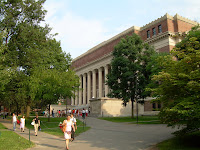 Another program-specific drawback was the lack of departmental affiliation. Outside of the classroom, academic support for matriculated graduate students at the Extension School consists of writing help, thesis research study groups, limited academic advising and guidance for the thesis proposal. It's also possible to serve as teaching and research assistants for instructors and FAS professors. Other than that, students are on their own. They can use Harvard's library facilities and attend open seminars elsewhere on campus, but the Extension School does not have full English, biology, or history departments that bring concentrators together on a regular basis or organizes guest speakers, special research projects, or other activities. I am not blaming the Extension School for this state of affairs -- I realize that it has limited resources and can't support full departments with dedicated faculty and staff. Still, it's disappointing to graduate students who are very serious about their studies and want to get the most out of their Harvard experience.
This brings up a related issue: The limited Extension School student community. There are a few clubs, and the Harvard Extension School Student Association (HESA) tries hard to organize social and academic activities, but the number of people who get involved is small relative to the total number of matriculated students. It's not surprising, considering most students live far from campus, have full-time jobs, and often juggle family responsibilities as well.
Online education is a huge growth area for the Extension School, but the technologies used today are not a suitable replacement for in-class instruction and discussion. Unlike traditional face-to-face classes at the Extension School, contact with Harvard faculty in the online classes is limited (Example: "Last term was my first semester at HES and I was surprised at the lack of assignment and test feedback that I received in the courses"). Even though many distance education students work extremely hard on assignments and tests, watching videos on the Extension School website and participating in limited online discussions does not represent a "Harvard-caliber" academic experience, as the Extension School claims. I strongly disagree with the Extension School's liberal online credit policies, which allow students in the undergraduate ALB and graduate ALM in IT programs to complete upwards of 90% of their coursework online, without ever sitting in the same room with their classmates or professors. Tellingly, neither Harvard College nor Harvard's professional schools offer online classes to their own students for degree credit.
You can see more of my thoughts about online education at the Extension School here, or read about the online math class I took for credit at the University of California at Berkeley Extension School in 2010. Bottom line: The convenience was addictive, but there was no sense of community or classroom discussion. I was basically "taught" by a textbook (the online element included some light reading, homework, and tests), and received university credit for it. To equate this form of online learning with a traditional, on-campus seminar or lecture is a major stretch.
Lastly, I must address issues relating to the Harvard Extension School's name. When President Lowell established the school nearly 100 years ago, "Extension School" made sense: It was a small program intended to give local residents a taste of the Harvard experience, and for a tiny number of people (for decades, just a couple of students per year), it offered a chance of earning an associate of arts degree. But the school has since outgrown its original mission, as I noted in June:
While the casual population remains (see "The Extension School's 88% dilemma") there is now a significant contingent of undergraduate and graduate students attempting to complete the requirements for the ALB and ALM (graduate) degrees. Forget the outdated student profiles promoted in this 1951 Crimson article -- nowadays, the ALB/ALM student body includes many high achievers and people from all over the world interested in taking advantage of the school's stellar academic offerings. Extension School undergraduates sometimes match or outperform their College counterparts, and among my own graduating class for the ALM/liberal arts degree were a Harvard Divinity School graduate, a Harvard Medical School instructor, and students who had already earned JDs from two of the top law schools in the country before coming to the Extension School.
 The problem with the Extension School name -- and the even worse replacement that the administration is promoting, "The Harvard School of Continuing Studies" -- is they reflect the temporary experiences of the majority, as opposed to the dedicated, long-term academic commitments of the minority. "Continuing education" and "continuing studies" suggest casual, open programs of study. That matches the Extension School's original mission, and meets the needs of the many thousands of students who take a class or two because they're curious or want to sample the Harvard educational experience. However, it does not reflect what I and others in the ALM/Liberal Arts program had to go through, in terms of completing graduate coursework and a major research and writing project, or the many years of dedicated studies that are required to receive a degree or certificate through the Extension School.
 This is not an attempt to slight continuing education or open enrollment at the Extension School. Continuing education helps individuals and benefits society. I've taken classes for personal enrichment and/or career advancement, such as the Mandarin courses I took at the Taipei Language Institute and my very first class through the Department of Continuing Education -- an introductory short story writing class that I took through the Summer School in 2002. But these experiences simply do not compare to my ALM journey.
It's quite clear that the Extension School's degree programs have outgrown Lowell's original mission and the Extension School name. Harvard could tolerate casual class takers and an associates degree program that graduated a handful of people every year, but it never anticipated the school would become a significant campus presence in its own right. The ALM program, which was launched in 1980, now has more graduates every year than the Harvard Medical School, the Harvard Divinity School, the Harvard School of Dental Medicine, and the Harvard Graduate School of Design. This is hardly what President Lowell envisioned when he established the Extension School. I also doubt most other people in the University community are even aware of what's going on at the Extension School -- at Commencement, I remember our gigantic procession passing the Kennedy School graduates outside of the Yard before the ceremonies started, and overhearing one remarking to her classmate, "the Extension School has degrees?"
Getting back to the name issue: I do not have any specific suggestions for a new school name, and frankly, I don't think it's possible to come up with a suitable name that reflects the school's greatly expanded mission and two disparate populations (casual class takers and serious degree candidates). But this leads me to think that it's not the name that is the root issue. Rather, it's the under-the-radar departure from the school's original mission and the resulting bifurcated student population.
As one might expect, these are sensitive topics among the Extension School student body. I am proud to list my ALM degree on my résumé, but I've found that many Extension School students and alumni play down their Extension School affiliations. The ALB and liberal arts ALM programs require a tremendous amount of work to complete and are quality degrees, yet many alumni would rather state they graduated from "Harvard University" (Harvard has sent mixed messages about this -- the 2008 Harvard Extension School C.V. guidelinesused to allow "Harvard University, Master of Liberal Arts, concentration in history", but the official Harvard Extension School résumé guidelines now require "Extension" be used in the name of the school or the name of the degree).
There is also a high-profile minority of students and alumni who misrepresent themselves as being affiliated with Harvard College, the Harvard Business School, the GSAS, and other professional schools at Harvard. When their lies are inevitably exposed, they not only embarrass the people making the false claims, it also hurts the reputation of the Extension School. These incidents are sometimes reported in the press, further damaging the reputation of the school and its students.
However, these issues should not detract from the quality of the course offerings, the top-notch instruction, and incredible learning experiences available through various Extension School programs. I know three people who have received Extension School degrees and have decided to start again in another HES degree or certificate program. If I had the time and the inclination, I would probably do the same, despite the problems listed above.
My Extension School experience
Like many students, I was introduced to the Harvard Extension School through work at Harvard University. Staff are allowed to enroll in classes at Harvard's professional schools at a greatly reduced cost through the Tuition Assistance Program (TAP). Many of my colleagues at the Alumni Affairs and Development Office pursued degrees at the Harvard Graduate School of Education, or took classes casually or for credit at the Extension School and Summer School. I took a Summer School course in 2002 on a casual basis, liked it a lot, and decided to take advantage of Harvard's TAP benefit. I had no interest in the programs at the Ed School, but was impressed by the Extension School catalog, and intrigued by the possibility of earning a masters degree there. I decided to register.

It took me five years to complete the ALM requirements. My first graduate-level class, History E-1830 (The Emergence of Modern China) started in January 2003, and my final elective, Humanities E-105 (Survey of Publishing, from Text to Hypertext) ended in January 2008. I graduated in June of 2008. I wasn't taking classes or working on my thesis for five whole years -- I took off one semester in the fall of 2004 when our second child was born, and there were several months-long breaks in 2006 and 2007 after my thesis proposal and final draft of the thesis were approved. With the exception of one archaeology class, I took all of my classes in the evening, and spent thousands of additional hours at night or on weekends studying, writing papers, and carrying out a seemingly endless set of database queries for my thesis research. I completed all of my courses on campus (as opposed to online) so I had to deal with commutes and parking as well. During the five-year period, I practically gave up reading for pleasure. There just wasn't enough time.
I also had work-related pressures to deal with, especially after I left Harvard in early 2005 and returned to the world of technology journalism. The pay was better, but the hours were longer and my office was far from campus. In addition, I no longer had the TAP benefit, so tuition, books, and other costs rose from a few hundred dollars per class to nearly $2,000 per class, on average. It was expensive, but it was absolutely worth it.
 I was a history concentrator. With the exception of two American history classes, most of my coursework related to ancient and modern Chinese history. I studied under Philip Kuhn, who has researched and taught Chinese history at Harvard for many decades. My thesis was completed under the guidance of Professor Alastair Iain Johnston, the Governor James Albert Noe and Linda Noe Laine Professor of China in World Affairs. The title: "Making a Case for Quantitative Research in the Study of Modern Chinese History: The New China News Agency and Chinese Policy Views of Vietnam, 1977-1993." Unlike most history theses that rely upon traditional qualitative methods, mine was quantitative in nature. I designed and carried out an extensive computer content analysis (also known as computer-assisted text analysis) to test a disputed issue relating to Post-Mao foreign policy using Xinhua, China's official news agency. You can read about my thesis here, and you can also read some of the other research papers I wrote when I was a student.
  Besides studying Chinese history, I also used my time at the Extension School to explore two additional academic interests: Virtual worlds and the Chinese Internet. There were many opportunities to branch out in these areas. I wrote an op-ed piece for the South China Morning Post about how the Internet and consumer technologies were eroding the power of China's government. I was a guest author on Terra Nova, an academic blog focused on virtual worlds and massively multiplayer online games, and was invited to take part in State of Play V, an international conference devoted to these emerging technologies. In my last year at the Extension School, I joined the Harvard Interactive Media Group, and for my final research paper for the survey class wrote an extensive analysis of the future of computer-generated 3D environments and the World Wide Web.
Best of the Harvard Extended blog
I launched Harvard Extended in mid-2005 to keep myself motivated as I started the most difficult stage of the ALM degree: The thesis. By reading the posts listed under "My ALM Thesis Experience: Top Ten Posts," you'll get an idea of the intellectual and practical challenges involved. Only a tiny percentage of the people who take graduate-level coursework at the Extension School ever complete the ALM degree requirements, thanks in large part to the thesis.
You'll also find many other posts about the Extension School, classes, and student life. I've come to the conclusion that the Harvard Extension School is one of the best educational deals in the country. I also believe the Harvard Extension School ALM program that I enrolled in was more academically challenging than many full-time graduate programs at Harvard and elsewhere. Nevertheless, I did not always blog about the good stuff and the high points. A range of opinions are covered in "Extension School Commentary: Top Ten Posts" section links further down the page.
I frequently used Harvard Extended as a platform for exploring other scholarly and professional interests, including virtual worlds, Chinese media, and the Internet. See "Research and Professional Interests: Top Ten Posts" for more information. Miscellany has a top ten list, too.
Harvard Extended has 414 entries, totaling well over 100,000 words, but the four lists below include what I consider to the most informative and interesting posts, essays, and asides. If you want more, you can read all 400+ posts by cycling through the monthly index on the right side of the Harvard Extended home page, starting with May 2005.
My ALM Thesis Experience: Top Ten Posts
- A.B.T.
- Thesis blues
- Thesis proposal: Start, write, throw away, rewrite
- A tale of two theses
- ALM Program: Quantitative vs. Qualitative Research
- Precis for Porter's Reporting the News from China
- Thesis update: Almost finished
- Thesis update: Done!
- Harvard Extension School Commencement
- Thesis update: Revising proposal, going granular with Yoshikoder
Extension School Commentary: Top Ten Posts
- The Extension School's 88% dilemma
- Crimson: Some virtual Extension School students outperform Harvard College classmates
- Harvard Extension School graduates and advanced Harvard degrees
- Harvard Extended Interview Series: Cynthia Iris, ALM government concentrator
- A painful case
- Harvard Extended interviews the creator of the Extension Student online community
- A note from a Harvard Extended reader
- Priorities: An ALM Management student takes a break
- Distance education at Harvard: I'm not convinced
- Legacy admissions and the "Z List" at Harvard College (Read the comments, too)
Research and Professional Interests: Top Ten Posts
- My new media manifesto: "Meeting the Second Wave"
- Thoughts on research, and saved by Scribd
- Another reason China should fear the 'Net: A million people with camera phones
- Five reasons why Chinese authorities won't be able to regulate the 'Net
- 1907 and 2007: The late Qing press vs. the current Chinese Internet
- Internet vigilantes in China
- Homer Simpson's brain, or why Xinhua continues to have a credibility problem
- Bible Study: Comparing Gutenberg's invention with the rise of the World Wide Web
- Serious about Second Life
- Interview: Harvard's Rebecca Nesson discusses teaching in Second Life
Miscellaneous: Top Ten Posts
- A Thai coup - echoes of 1992?
- The British Empire in Colour
- Your ridiculous clamour for "human rights" is nothing but a shrill cry!
- My parents meet the father of the 2008 Olympic mascots, and other Beijing impressions
- Tunes for writing or studying
- The Chinese Diaspora in Southern Africa
- What's the value of a University of Phoenix degree?
- Chinese tattoos can be really, really dumb
- UMass Boston and bias in the Boston Globe, continued
- Quick Taipei
My own blogging will shift over to I, Lamont, and you can also keep up with my day-to-day experiences on Twitter, either from the feed on the right side of this page, or by visiting my personal Twitter page. I have also created a special @HarvardExtended twitter account, and update it with news and views that have connections with the Extension School or education.
 It's been a good three-year run, but this is where Harvard Extended ends. Thanks for reading!
Ian Lamont
ALM '08
(Update: Since writing this post, I have launched a company which is dedicated to helping people understand complicated technologies and concepts. Besides creating online posts which address questions such as What Is Dropbox and What Is Google Drive, I have also published a series of guides under the In 30 Minutes brand.)


