Saturday, April 29, 2006

Photos: Liyu Mountain (鯉魚山) Views

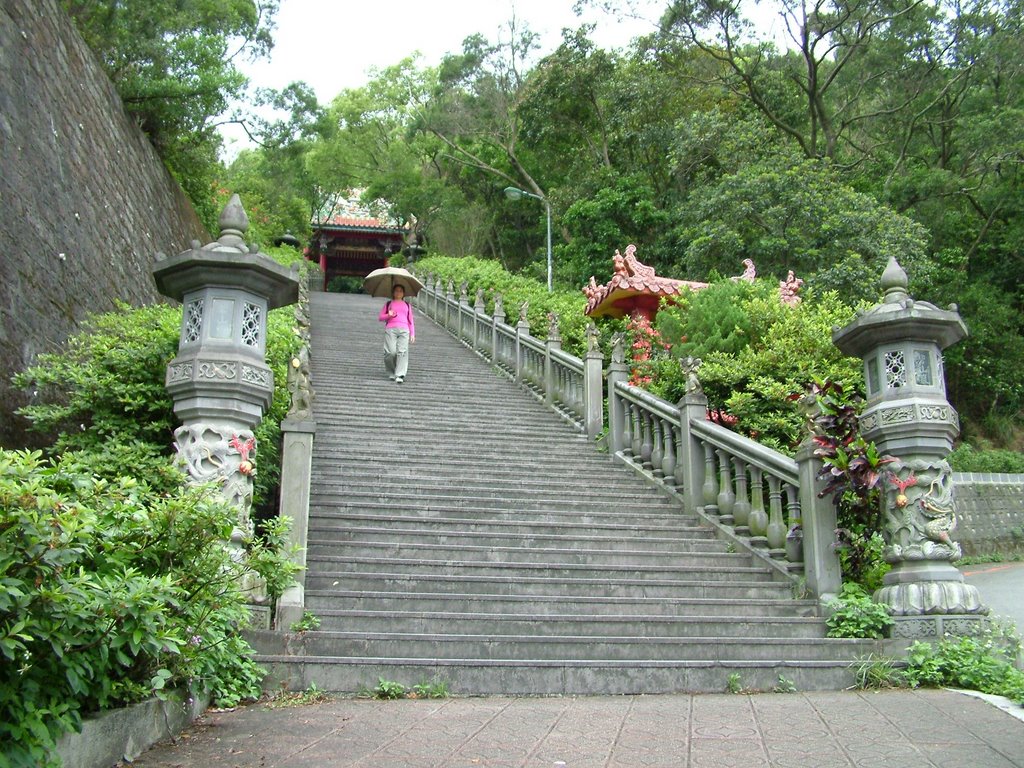
The "plum rains" have stopped, and I hiked up Liyu Mountain (鯉魚山) to get some exercise and take some photos.

Taipei 101, visible from across the basin:


Even electioneering makes it up into the hills above the city:


Thursday, April 27, 2006

Taiwan's changing broadcast landscape results in KMT selling CTV

I was surprised to see a Taipei Times article last week detailing the Nationalists' (a.k.a. KMT, GMD, 國民黨) efforts to sell off key media properties, including the China Television Company (中國電視公司). I used to work at CTV, in the news department.

My first reaction to the news of the sale was, why? The article suggested the KMT has some cash-flow issues, but a former colleague told me that there's more to it than that: A change in local regulations which requires political parties to divest themselves from media ownership. Additional reform has also taken power away from the Government Information Office -- the former propaganda/regulatory body for broadcast media -- and placed oversight in the hands of the National Communications Commission, an "independent" agency which is similar in responsibilities to the American FCC.

My reaction to these developments? It's about time! The idea of Taiwan's dominant political party owning a major terrestial broadcasting station was ridiculous 10 years ago. Certainly, the Nationalists' grip on political power has weakened since then, and cable TV and the Internet news has eroded CTV's market share, but nevertheless the selloff of CTV and other KMT media assets is something that should have happened a long time ago.*

When democracy and accountability comes to China, expect a similar selloff of state/party-run media outlets, including the New China News Agency and CCTV.

* Will the character of CTV's news change much under its new owners, the China Times? Maybe not. The China Times is itself a conservative news organization, and from what I hear, there has been no shakeup in the ranks of the CTV news department. It will be easier to gauge CTV's political bias under its new owners during this year's local elections, and Taiwan's 2008 presidential election.

Wednesday, April 26, 2006

Flawed HESA Constitutional vote

I just tried -- unsuccessfully -- to vote on the proposed constitutional amendments to the HESA constitution. Here're the problems:

1) I was never sent a ballot automatically (and yes, I did check my bulk mail folders on both my Yahoo and FAS email accounts).

2) I requested a new ballot on the evening of April 24. I wasn't sent a new ballot until the morning of April 26, 12 hours before voting closed.

The result? I didn't check my email all day, and missed the deadline by about an hour. Too bad, I really wanted to vote.

Since the vote is over, I'll add my two cents here: While obviously a lot of thought has gone into the proposed changes, and the purpose of the amendments are to implement increased accountability and other noble aims, I would have voted "no." The reason relates to the increase in the number of HESA officers and participants (at-large positions, etc.). I participate in lots of meetings, and I've found that putting more people into the mix adds to bureaucracy and invariably hinders decision making. Additionally, seeing that HESA already has difficulty fielding candidates for existing positions, where are these additional warm bodies supposed to come from?

Tuesday, April 25, 2006

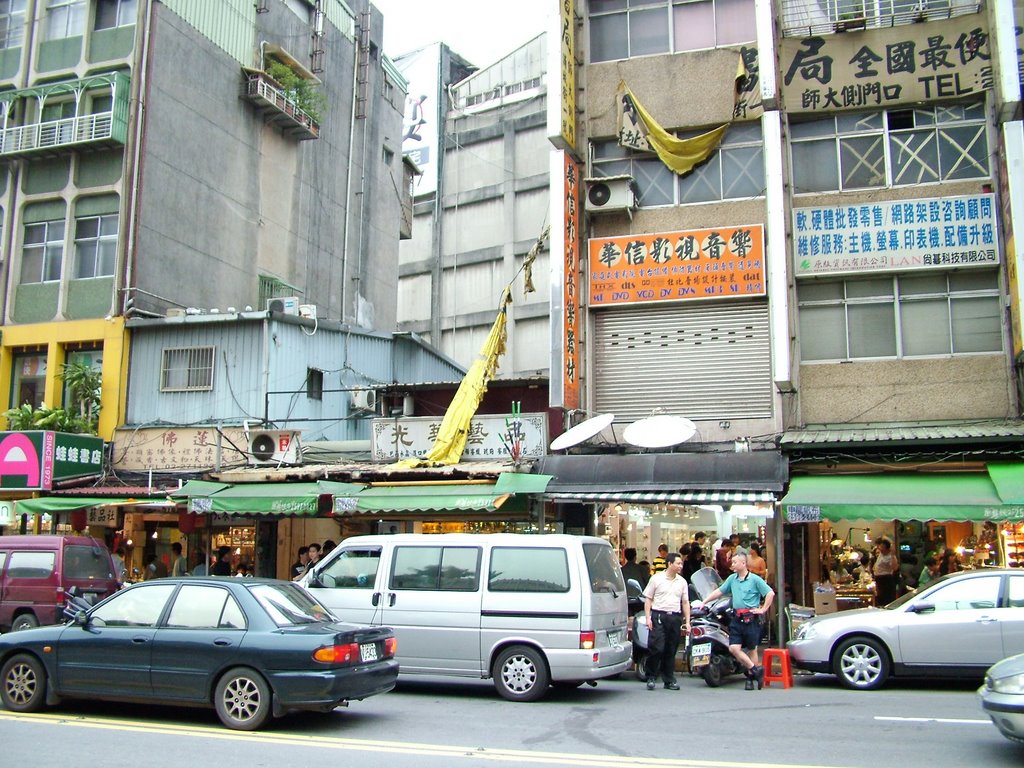
Taipei street photos: Life under the overpass

Images of Taipei: Vicinity of Bade Road (八德路) and the seven-year-old Civic Boulevard (市民大道), which now looms over the old apartment buildings, shops, and street life of central Taipei:


Some other photos from the area. It's amazing to me, even after living in Taipei for six years, the contrasts of the city. On one street there can be so much happening, like indoor markets for jade (the first photo) and just a block away, there's a quiet side street with a local temple, and not a soul in sight:


Earlier Taipei photos:

Monday, April 24, 2006

Another Crimson scoop

I've said it before, but I'll say it again: The Crimson on occasion can really hold its own in terms of reporting. The paper put most mainstream media outlets to shame with its coverage of Summers' struggles earlier this year and now it's scooped a major story involving literary plagiarism (see David Zhou's "Publisher 'Certain' of 'Literal Copying' in Sophomore's Novel" and the Crimson Staff's "Kaavya Speaks: 'I Sincerely Apologize'". The New York Times and other MSM agencies are belatedly catching up.

Now if only the Crimson could do a better job with its editorials ...

Update:

The Crimson continues to scoop MSM outlets on this story. See "'Opal' Similar to More Books"

Sunday, April 23, 2006

Taipei Signs

A sampling of street signs, spotted on Chenggong Road, Neihu district, Taipei:


The last one, which is hard to make out, says in English, "Wow, Frog Eggs!", alongside a drawing of a frog. The Chinese menu lists sweet drinks made with tapioca balls, which do kind of look like frog eggs.

Friday, April 21, 2006

碧山巖: More photos

Went up to Bishan Temple (碧山巖) again, to explore the hiking paths and take more pictures:


Pictures from yesterday are here.

Thursday, April 20, 2006

Bishan Temple (碧山巖) Photos

Images from Bishan Temple (碧山巖), Neihu district, Taipei:

Stairway to Bishan Temple


View from Bishan temple, facing south-southeast

Wednesday, April 19, 2006

Chinese media: Apple Daily makes a splash in Taiwan

Taiwan is a very well-known media hotspot in Asia. I remember 10 years ago seeing a stat that found its population to be the most voracious readers of newspapers in the world. Even with the advent of the Internet, newspapers are still very popular. On a recent connecting flight from the U.S. to Japan, very few of the Japanese passengers read Japanese newspapers during the 13-hour flight even though they were readily available as we got on. Contrast that with the two-hour flight from Osaka to Taipei CKS -- it seemed every third seat was occupied by a Chinese newspaper reader. Many of them were younger people in their 20s, whom I assume are Internet users when back on earth.

Staying with relatives, I observed some changes in people's media consumption habits since I lived in Taipei in the 1990s. One was my brother-in-law's switch from one of the old standbys of the Taiwan newspaper scene -- the China Times (中國時報) and United Daily News (聯合報) -- to the Apple Daily (蘋果日報). The Apple Daily made a huge splash when it debuted in Hong Kong in the late 1990s, and now that I have had a chance to look at the Taiwan version, I can see why it appeals to people like my brother-in-law.

It's not just the "lurid" elements which observers often use to describe the paper. That's certainly part of the appeal -- the back cover of the front section of the April 19, 2006 edition has a motley collection of accident and suicide photos with blurbs explaining the background of each death.

But there's a lot more to the Apple Daily than sensationalism. Many articles include accompanying charts, timelines, infographics that calculate cost (if money is involved), and artists renditions of crime scenes. There's also a huge tie-in to the social aspect of news: short blurbs of man-on-the-street reactions to news stories featuring photographs and short bios of the people being interviewed. This gives readers social cues to how they should be reacting, even if the story might not impact them directly.

These packages aren't just put together for the biggest story; it seems that about five or six stories in the front section of the Apple Daily get this type of treatment. The front-page story, for instance, screams out the main story of the day in 96-point type: "China Petroleum Corp. raises the price of gas $2 NT". No, this is not the type of news that would get 96-point headlines in most other papers (the same news is reported in a much smaller article on page A7 of the China Times), but it's part of the Apple formula, even on slow news days. Accompanying the news article about the price hike are the following elements:
  • An infographic showing recent price rises

  • A chart calculating how much it will cost for a bus ticket from Taipei to other major cities on the island, and a sidebar article on the same.

  • A chart listing the new prices of different grades of gasoline

  • A chart listing discounts available at three gas station franchises

  • Three photographs of people queuing up or filling up at gas stations

  • A man-on-the-street reaction sidebar, which includes photographs and blurbs of three people from different parts of the island reacting to the news.
The man-on-the-street reax were the most interesting to me and I am sure to lots of other readers. Two New Taiwan dollars doesn't sound like much to most people (it's about six U.S. cents) but Apple's reports were able to get some great reactions, including a Taxi driver from Taipei who pointed out that it's going to take about NT$1500 (about US$50) per month out of his pocket, and a guy from Kaohsiung who complains about CPC and notes that his salary certainly isn't rising along with the price of fuel.

The charts are also much different than what the competition prints. The China Times package on page A7, for instance, has a very old-fashioned looking, text-only chart listing the prices of fuel for each grade at each major gas station franchise. The Apple charts go much further, calculating prices for bus tickets and fill-ups for real-world trips between major cities in Taiwan, and also detailing special deals and discounts at gas stations. This is the the type of information people can use and appreciate right away, whereas the Times just gives the bare essentials, and lets people make their own calculations.

Taiwan Apple Daily's 'I'm the Prettiest' subject for April 19, 2006The Internet tie-ins for the Apple Daily are limited. The footer of every page in the front section has an email tips address, but the Web address of the paper only appears in small type below the fold on the front page. On the back cover next to the death photos there is an interesting and incongruous print feature with links to an Apple Blog. It's called "Today I'm the Prettiest" (今天我最美). The explanation says the Apple aims to seek out and print photos of the most beautiful girls the Apple's photographers happen to see "on Taiwan's biggest streets and smallest harbors." The April 19, 2006 "Today I'm the Prettiest" showcases an attractive 30-ish woman in jeans and white top who, according to the caption, happened to be walking down Zhongxiao East Road in front of the Pacific Department Store at 2:54 p.m. Snap! She's now on the back cover of the Apple. No name is given, and it's not clear how permissions work. But there she is in print, and also online, at blog.appledaily.com.tw/beauty.

One thing I like about the Apple is that it's relatively easy for me to understand. When I was at the Taipei Language Institute (中華語文研習所) I attempted to translate Chinese newspaper articles clipped from the China Times. It was bloody hard. The journalistic Chinese was complex, used lots of unfamiliar characters which required me to constantly refer to my dictionary, and had little in the way of easy-to-understand charts. My wife gets the World Daily News (世界日报) which is printed in New York, and I seldom bother attempting to read it -- Like the China Times, the headlines, articles, and even photo captions in the World Daily News are simply too hard for me. The Apple Daily, on the other hand, seems to use more colloquial Chinese in articles and accompanying package items such as infographics and man-on-the-street interviews. I was able to get the gist of several articles and features without even picking up my dictionary. Maybe foreign readers who attempt to understand the New York Times get a similar feeling when they pick of the New York Post!

When my brother-in-law gets home, I'll ask him why he switched to the Apple Daily. Is it the more interesting story packages? Or "Today I'm the Prettiest?"

Update:

My brother-in-law's reasons for buying the Apple Daily every day:
  • "It's popular"

  • "It's cheap"

  • "More information"
My wife's reasons for disliking the Apple Daily, after reading the April 19 issue:
  • "亂七八糟" (messy, confusing, chaotic)

Saturday, April 15, 2006

Crimson: Some virtual Extension School students outperform Harvard College classmates

Elizabeth Doherty of the Crimson Magazine has written an article about distance education students at the Extension School. One of her angles, backed up by multiple sources, finds that in several classes in the Distance Education Program, Extension School students who take the class online are besting their Harvard College classmates who attend in real life (emphasis in the following excerpt is mine):
Several DEP courses—including CSCI E-2, “Bits,” and GOVT E-1045, “Justice” -- are the same classes that students sit (or sleep) through in the Science Center or Sanders Theater. Online students take the same exams, write the same papers, and are graded on the same curve as “real” Harvard undergraduates. And, according to some faculty, many of these Distance Program participants are more dedicated than the average student.

FOR LOVE OF LEARNING

Brian M. Greenberg ’04, the Distance Program TF for CSCI E-2 (also known as Quantitative Reasoning 48), says that HES students can actually be “more fun” to work with than undergraduates. He says that College students often “take the learning process for granted,” adding that “the people in the Distance course are paying money out of their own pocket to complete the process. They will go out of their way to make sure they understand.”

Some students go far out of their way, even if it means crossing state borders. According to Greenberg, one of his past students from Albany, NY, wanted to drive to Cambridge to go over course material.

Even oceans can’t stop the DEP students’ commitment to learning. According to Greenberg, one student from the United Arab Emirates dealt with an eight hour time difference by watching lectures in internet cafes between two and three AM his time.

Senior Lecturer in Mathematics Paul G. Bamberg Jr. ’63, whose class on classical geometry is open to both undergrads and Extension School students, echoes Greenberg’s positive experience with HES. Bamberg emphasizes that everyone is held to the same standards, saying that, “they all sit in the same classroom and take the same exams, and over the past three years the Extension students have done as well as the undergraduates.”

According to Bamberg, the two highest grades last year were earned by Extension students. For the past two years Extension students outperformed their peers on his midterm -- one even earning a perfect score.
Doherty's article also touches upon a few other Extension School issues, ranging from the makeup of the student body, to the University's reaction to the nasty Crimson editorial about Hillary Duff attending the Extension School.

Update:

Some reaction to Doherty's Crimson article in the letters to the editor:

Online Education, Even At Harvard, Is Inadequate

Harvard Distance Education Is A Valuable Initiative

Wednesday, April 12, 2006

The newest Americans

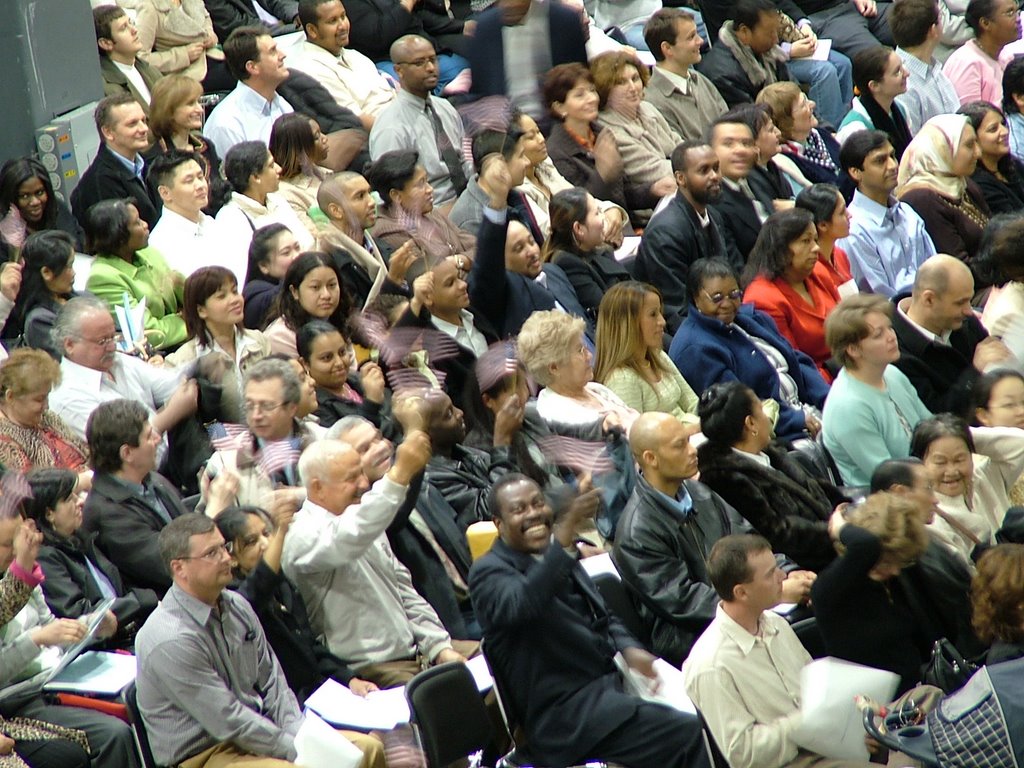
My wife was naturalized yesterday. It was one of the most unusual ceremonies I have experienced -- more than 3,075 foreign-born residents from all corners of the planet were gathered into the Hynes Convention Center in Boston and naturalized en masse.

It took three hours to get everyone processed and sitting in the correct seats (the certificates were handed out in order when they left the room, so people had to sit in certain rows). Judging by the languages I heard around me, and the appearance of the people crowd, the new citizens from the Boston ceremony were dominated by immigrants from Latin America and the Caribbean, with smaller numbers from Africa, Russia, China, and Southeast Asia.

Once everyone was seated, the ceremony was officiated by a judge, and what they did was temporarily turn the austere concrete hall into a courtroom so the aliens could take the oath and then be pronounced citizens. A smaller group (475, or thereabouts) had name changes as well (many to Americanized first names). The judge carried out these tasks within a few minutes -- kind of reminded me of Feng Yuxiang's (馮玉祥) mass baptisms by firehose. He then gave a very nice speech, telling them how important immigrants are to this country, and how much they have contributed to society. He used examples of famous people (Albert Einstein, I.M. Pei, Manny Ramirez, Arnold Schwarzenegger, etc.) and also pointed out that many children of immigrants achieve success as well, such as two of the Supreme Court justices.

We were of course very glad; the process has taken us years, with an unbelievable amount of intrusive, insulting, inefficient, and unnecessary bureaucracy. She had to have her fingerprints taken three times, the INS/DHS entered the incorrect birthday into her record, we paid thousands of dollars in fees for terrible service, etc. But we put up with legal requirements and now she is an American, with all the rights and responsibilities that come with citizenship.


Wednesday, April 05, 2006

Harvard Extended site search ... finally!

After close to a year and more than 150 posts, it was starting to get to the point where even I had trouble finding stuff I've written on my own site. So I've added site search. It's on every page in the right hand column; enter text in the search field, check the Harvard Extended radio button, and click Google Search.

Tuesday, April 04, 2006

The value of an MBA, con't

I've talked about the value of advanced degrees before (see "When education trumps experience" and "Part-time vs. Full-time, Online, and my Harvard whine") but the Feld Thoughts blog has stirred things up with advice to prospective MBA students:
IÂ’m 40. I don'’t believe that the degree I have has ever had any material impact on my "career" during the last 20 years. I can'’t think of a single situation where it came up in a conversation about anything that I was considering doing. ... While many people wear their degrees as badges of honor on their chests, I prefer to let actions speak for themselves (and - rather than look at the badges people have, I look for the actions.) ...

... Recognize this will cost you $100k plus two years of opportunity cost, so make sure it'’s worth it to you. There are many careers where you generally (but not always) need the MBA badge to advance to the next level. If you are an investment banker or a management consultant, it'’ll help. If you are looking to be a VC, it might help, but it probably wonÂ’t, as the population of people being recruited into the VC business continues to be very small. Don'’t be misguided by the idea that doors will now fly open to you since you are a newly minted MBA ...
Feld's reader comments are interesting -- the MBA students and grads are adamant that MBAs lead to opportunities that otherwise would not have been available to them. Harvard B-school grad Chris Yeh is one of them.

And then there's this response to the pro-MBA camp from Matt Weiser:
Personally, if I couldn't get into Stanford, Wharton, MIT or Harvard, I'd take the cash and join a country club. No joke - the contacts you'd make would be better than you'd get at the 2nd tier or below schools, and you can keep working and reading to further your skills.